
COLD CORE BOX MANUFACTURERS BUILT FOR CORE CONSISTENCY
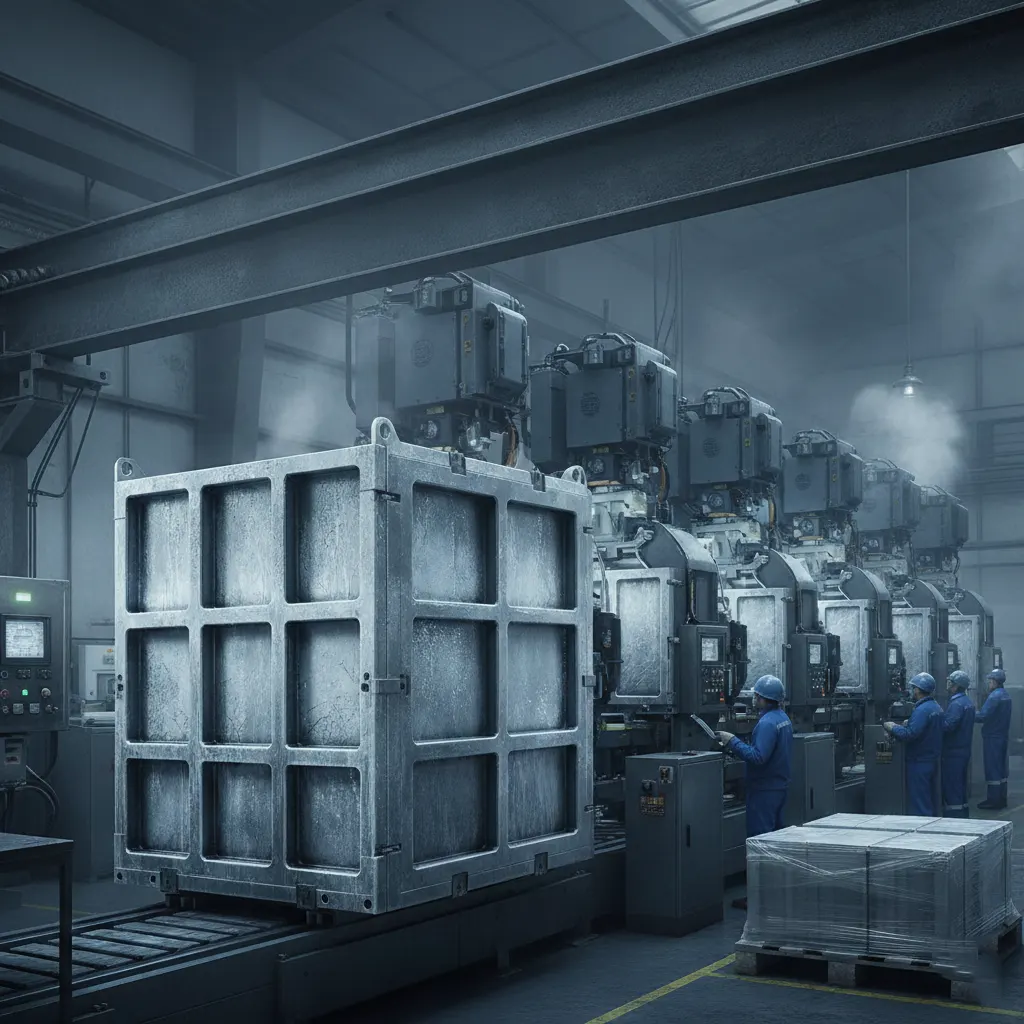
Engineered core boxes designed to deliver dimensional accuracy and repeatable sand compaction.
Alpha Foundry Tooling, experienced cold core box manufacturers and sand corebox coldbox specialists, deliver core boxes that ensure dimensional accuracy, surface finish, and consistent core strength across production cycles. Core box geometry, venting, sealing, and gassing layout determine consistency across shifts, cavities, and production volumes. Inadequate engineering leads to weak cores, gas-related defects, dimensional drift, and unstable production output.
Our manufacturing approach focuses on core boxes engineered for stable performance under continuous gassing cycles. Each core box is designed to control sand filling, resin curing, gas evacuation, and long-term dimensional stability as a single system.
Tool construction is aligned with cold box process behaviour and amine gassing system requirements to maintain consistent output from trials through sustained production.
Why Cold Core Box Engineering Impacts Casting Quality?
Core box performance sets the baseline for repeatability across all downstream casting operations. Well-engineered cold core boxes enable:

Uniform core density and strength

Accurate core geometry across production cycles

Controlled gas flow and curing behaviour

Reduced scrap from core breakage or distortion

Stable core output during high-volume production
Production Advantages Achieved Through Our Cold Core Box Manufacturing
These advantages demonstrate how core box design directly affects core quality, process stability, and operating efficiency.
Optimised Gassing and Venting Design
Gas inlets, exhaust paths, and vent locations are engineered to ensure complete and uniform resin curing across each core curing cycle, without over-gassing or soft zones.
Dimensional Stability Under Repeated Cycles
Materials, wall thickness, and structural reinforcements are selected to prevent distortion caused by clamping pressure, temperature variation, or repeated handling.
Consistent Core Release and Handling
Draft angles, surface finishes, and ejection features are designed to allow clean core removal without damage or operator intervention.
Extended Tool Life in Abrasive Conditions
Wear-prone surfaces are protected through material selection and reinforcement to maintain accuracy as production volumes increase.
Reduced Process Sensitivity
Core boxes are tolerant to normal variations in sand properties, resin levels, and operating conditions, reducing unplanned downtime.
Cold Core Box Manufacturing Scope and Technical Parameters
An overview of the engineering considerations, construction methods, and validation controls applied during core box manufacturing.
| Parameter | Details |
|---|---|
| Core Box Types | Single cavity, multi-cavity, split, and complex sand corebox coldbox assemblies |
| Construction Materials | Aluminium alloys, hardened steel, hybrid assemblies |
| Process Compatibility | Cold box amine and CO₂-assisted cold curing are used by cold core box manufacturers |
| Gassing Strategy | Balanced inlet and exhaust design for uniform curing |
| Venting Control | Precision-machined vents to prevent gas entrapment |
| Dimensional Control | Machined datums and controlled mating surfaces |
| Surface Treatment | Wear-resistant coatings and release-friendly finishes |
| Production Volumes | Short-run validation to high-volume serial production |
| Engineering Inputs | Core drawings, sand data, resin system parameters |
| Validation Method | Trial cores, dimensional checks, process feedback |
Foundry Applications Supported by Cold Core Box Manufacturers India
Cold core boxes are essential in casting programs where internal geometry accuracy and core integrity directly affect casting performance.
Automotive Engine and Powertrain Castings
Structural and Machine Tool Castings
Hydraulic and Pneumatic Components
General Engineering and Jobbing Foundries
Industrial Valve and Pump Housings
Why Foundries Rely on Alpha Foundry Tooling for Cold Core Boxes?
Cold core box performance must remain predictable under continuous, high-cycle production conditions, which distinguishes experienced core box manufacturers in production environments. Alpha Foundry Tooling is trusted for core boxes engineered to deliver consistent curing, accurate geometry, and long-term reliability in production environments.
Process-Driven Core Box Engineering
Design decisions are based on sand flow, gas behaviour, and curing dynamics—not just cavity geometry.
Failure Risks Addressed Before Build
Potential issues such as weak zones, gas shadowing, and premature wear are resolved during engineering, not after commissioning.
Controlled Interface and Assembly Accuracy
Split lines, mating faces, and alignment features are precision-machined to maintain repeatability across assemblies.
Built for Production Evolution
Core boxes are designed to support automation, increased cavitation, and higher cycle rates as programs mature.
Contact Alpha Foundry Tooling to discuss cold core box manufacturing solutions tailored to your production requirements.
Improve Core Reliability With Purpose-Built Cold Core Boxes
We support foundries in achieving stable core quality, reduced scrap, and predictable casting performance through production-aligned core box engineering.
FAQs
What is cold core box manufacturing used for?
Cold core box manufacturing produces core box tooling used to form sand cores cured through gas-assisted resin systems for metal casting applications.
How does core box design affect casting quality?
Poor core box design can cause weak cores, dimensional inaccuracies, gas defects, and casting rejections. Proper engineering ensures consistent core strength and geometry.
Can cold core boxes be designed for high-volume production?
Yes. Core boxes can be engineered with reinforced structures, wear protection, and efficient gassing to support continuous, high-cycle operation.
What materials are typically used for cold core boxes?
Aluminium alloys and hardened steel are commonly used, selected based on production volume, wear expectations, and core complexity.
Why choose Alpha Foundry Tooling as your cold core box manufacturers and sand corebox coldbox supplier?
Alpha Foundry Tooling delivers durable, precise, and high-volume production-ready core boxes. Our engineering approach ensures consistent core quality, dimensional accuracy, and long-term reliability across production cycles.