
JIGS AND FIXTURES MANUFACTURING FOR PRECISION MACHINING ACCURACY
- Product Portfolio
- Jigs and Fixtures Manufacturing
Purpose-built jigs and fixtures engineered to stabilize machining processes and eliminate variability.
Jigs and fixtures manufacturing plays a critical role in ensuring machining accuracy, repeatability, and process stability. Poor workholding and inconsistent part location lead to dimensional variation, increased tool wear, and higher rejection rates in machining operations.
As an experienced fixture design and manufacturing company in India, Alpha Foundry Tooling delivers custom workholding solutions designed around part geometry, machining sequence, and production requirements. Our jig and fixture design approach focuses on rigidity, precise part location, and ease of operation—helping manufacturers achieve consistent output, reduced setup time, and improved productivity across machining processes.
Our solutions focus on rigidity, accuracy, and ease of use, helping machining teams achieve consistent output with reduced intervention.
Why Precision Workholding Is Critical for Machining Consistency
Fixture design and workholding systems directly influence machining accuracy, repeatability, and overall stability in CNC machining processes. Poor workholding design leads to increased setup time, measurement corrections, and dimensional drift.
Well-engineered jigs and fixtures help to:

Control part location and orientation using precision workholding solutions

Reduce setup dependency on operator skill with standardized jig and fixture design

Maintain dimensional repeatability across batches in high-volume machining production

Improve machining cycle stability

Support predictable quality output
What Our Jigs and Fixtures Enable on the Shop Floor?
Each solution is designed to enhance process control, minimize variability, and streamline production.
Accurate Part Location with Precision Fixture Design
Datum-based positioning ensures consistent referencing across CNC machining operations, minimizing dimensional variation and ensuring consistent part positioning across operations.
Reduced Setup Time
Pre-defined locating and clamping systems in custom jigs and fixtures enable faster loading, alignment, and changeovers.
Improved Process Repeatability
Rigid construction and controlled clamping in machining fixtures prevent movement during operations, ensuring consistent production output and repeatability across machining cycles.
Extended Fixture Life
Material selection and wear-point design ensure fixtures withstand repeated use without loss of accuracy.
Safer and More Efficient Operation
Ergonomic layouts and simplified handling improve operator efficiency and reduce handling risks.
Technical Overview of Fixture Design & Manufacturing Capabilities
Our fixture development process combines precision engineering, fixture design expertise, and controlled machining to deliver reliable industrial tooling solutions.
The following parameters describe how our jigs and fixtures are designed, manufactured, and validated for machining accuracy and durability.
| Parameter | Technical Details |
|---|---|
| Fixture Types | Drill jigs, milling fixtures, turning fixtures, inspection fixtures, assembly fixtures |
| Locating Methods | Pin-based, V-block, rest pad, and datum-referenced locating systems |
| Clamping Mechanisms | Manual clamps, toggle clamps, hydraulic or pneumatic options as required |
| Material Selection | Tool steel, alloy steel, aluminum, and cast iron, based on rigidity and wear needs |
| Manufacturing Process | CNC machining with controlled tolerances followed by functional fitting and assembly |
| Accuracy Control | Datum alignment, repeatability checks, and tolerance validation |
| Supported Operations | Milling, drilling, boring, tapping, turning, and inspection |
| Production Suitability | Prototype fixtures, batch production, and high-volume machining lines |
| Design Support | CAD-based fixture layout, tool clearance analysis, and machining sequence planning |
| Validation | Trial fitting and part verification before production release |
Applications of Jigs and Fixtures in Precision Machining
Jigs and fixtures play a critical role in machining environments where accuracy, throughput, and repeatability directly affect cost and quality.
Automotive & Auto Component Machining
Pump, Valve & Housing Machining
Precision Engineering Components
Aerospace and High-Tolerance Parts
Industrial Equipment & Assemblies
Workholding Solutions Designed Around Real Production
Selecting the right fixture development partner impacts machining efficiency, quality, stability, and long-term productivity. Manufacturers rely on Alpha Foundry Tooling for a practical, production-oriented approach.
Process-Centric Fixture Design
Fixtures are developed around actual machining sequences, tool paths, and shop-floor constraints.
Early Engineering Involvement
Design collaboration during process planning helps eliminate downstream alignment and access issues.
Consistent Build Quality
Controlled manufacturing and inspection ensure fixtures perform as intended over repeated cycles.
Scalable Manufacturing Support
Tooling is designed to scale with program growth, supporting single-station fixtures as well as multi-operation production setups.
JIGS AND FIXTURE MANUFACTURING
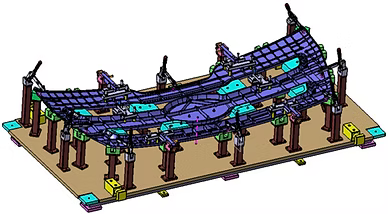
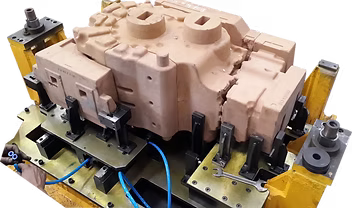
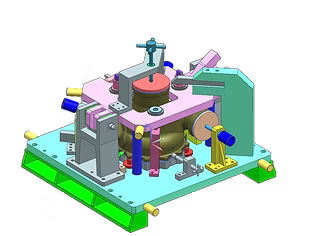
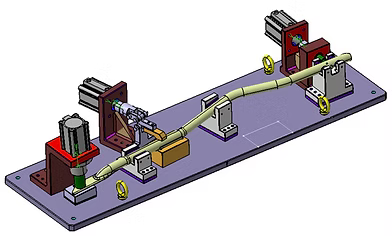
Alpha has handled numerous projects of Jigs and Fixtures which were demanded for specialised applications in the foundry sector. We have gained experience by working closely with industry leaders and technical professionals and were able to achieve a level of expertise to take up new challenges in this area.
- Inspection fixture
- Core assembly and transfer fixture
- Targeting fixtures
- Welding fixtures
WORK FLOW
At Alpha, we can help you in all facets of development and manufacturing of dies and related equipment. Take a look at our Workflow and contact us for assistance in any of the represented areas. We assure you of providing a complete solution to your challenges.
Understanding Requirements
Project Management
Development & Designing
Planning & manufacturing
Sampling & testing
Process development
Solve Machining Variability with Expert Workholding Solutions
Our custom fixture solutions are designed to improve machining consistency, reduce rejection rates, and enhance overall production efficiency.
Support includes:
- Selection of appropriate jig or fixture concepts
- Identification of root causes for machining variation
- Improvements in setup efficiency and repeatability
- Fixture development for new components or process upgrades
FAQs
How do jigs and fixtures improve machining accuracy?
They control part location and clamping, ensuring consistent reference points and preventing movement during machining operations.
What determines the type of fixture required for a component?
Part geometry, machining operations, tolerances, production volume, and machine configuration all influence fixture selection.
Can fixtures be designed for multiple operations?
Yes. Multi-operation fixtures can support sequential machining steps, reducing handling and setup changes.
Are fixtures customized for specific machines?
Fixtures are designed considering machine type, table size, spindle access, and tooling layout to ensure proper integration.