
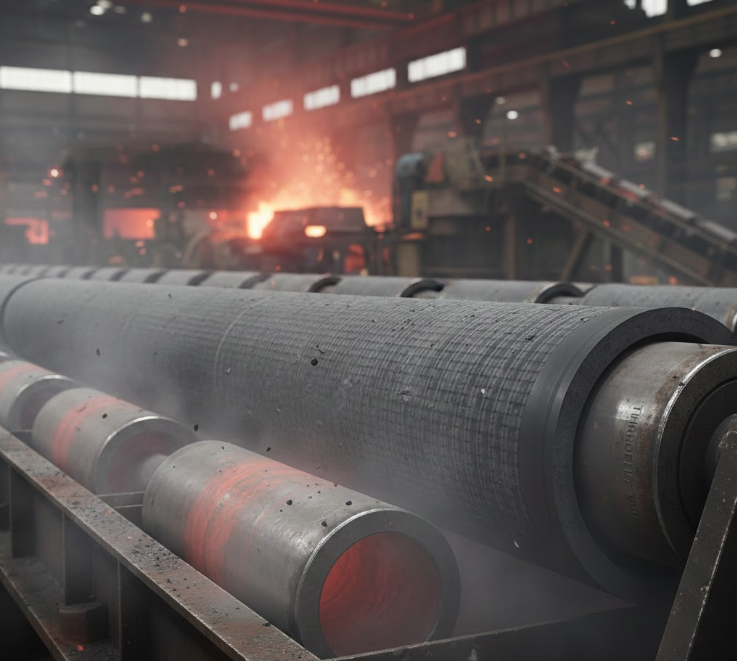
A Heat Resistant Rubber Conveyor Belt functions as an essential component for industries that need to transport materials through extreme temperature conditions present in cement production, steel manufacturing, power generation plants, and foundry operations. The belt will experience efficiency and service life reductions, which occur at a gradual pace because of continuous contact with heavy loads and abrasive substances when maintenance activities remain insufficient. The maintenance schedule needs to be executed according to its design because it protects rubber materials while stopping early deterioration and maintaining effective conveyor system functions. The facility will experience reduced operational costs through safety enhancements, which result from regular inspection and maintenance activities. The process of maintaining a heat-resistant rubber conveyor belt requires knowledge that leads to dependable equipment performance and extended operational life during high-temperature conditions.
Understanding Operating Conditions and Heat Exposure
The operating conditions of a system will determine how long a Heat Resistant Rubber Conveyor Belt will last. The evaluation process needs to consider temperature changes, material abrasive properties, and conveyor operation speed to prevent belt damage. The main elements that determine performance include
- The highest temperature and the continuous temperature for operation
- The specific material type and its temperature that will be transported
- The weight of the load and how often it will be dropped
- The system will receive thermal radiation from outside sources.
Why a Planned Maintenance Schedule Is Critical
The maintenance schedule helps maintain the Heat Resistant Rubber Conveyor Belt because it detects problems that need to be solved before they develop into major faults. The continuous monitoring system makes it possible to achieve three main goals, which include:
- The system prevents unexpected failures of the conveyor belt.
- The system decreases expenses related to equipment upkeep and new equipment acquisition.
- The system enhances workplace security.
- The system keeps conveyor belts operating properly even when they experience extreme temperature conditions.
Daily Maintenance Checks forHeat-Resistantt Rubber Conveyor Belts
Daily checks help detect early damage caused by heat and material friction. The regular observation of a Heat Resistant Rubber Conveyor Belt should identify:
- Surface cracks, burns, or hardening
- Belt misalignment or slippage
- Material spillage and carryback
- Unusual noise or vibration
Weekly Inspection Routine
The inspection routine, which occurs every week, helps to identify emerging problems that daily inspections fail to detect, which ensures that the Heat Resistant Rubber Conveyor Belt remains stable and operational. The inspections assess both mechanical alignment and heat-induced wear to avoid unanticipated breakdowns. The inspection team must complete these essential weekly tasks:
- The team must assess belt tracking to correct any existing misalignment.
- The team needs to check belt tension because it helps them determine whether slippage and overstretching will happen.
- The team needs to inspect all rollers, idlers, and pulleys to identify any heat-related damage or operational failure.
- The team needs to inspect all splices and joints to identify any signs of separation or hardening.
- The team needs to monitor all unusual vibration,d noise, and temperature changes.
Monthly Preventive Maintenance Practices
The Heat Resistant Rubber Conveyor Belt needs monthly preventive maintenance because this routine work protects its operational lifetime and capacity to withstand high temperatures. The scheduled maintenance checks enable the maintenance team to examine equipment wear patterns and solve problems that could lead to dangerous situations. The essential monthly maintenance activities involve these tasks:
- The team measures belt cover thickness to track heat-related material degradation.
- The team examines splices, joints, and fasteners to determine their strength and flexibility.
- The team measures belt hardness and elasticity to evaluate the effects of extended heat exposure.
- The team analyzes temperature records to identify any instances of temperature variation beyond the normal limit.
- Team personnel perform body checks on a conveyor line and support structures for any high-temperature stress.
Quarterly Deep Inspection and System Review
A quarterly deep inspection provides a comprehensive evaluation of both the Heat Resistant Rubber Conveyor Belt and the entire conveyor system. The review investigates how sustained heat exposure and operational stress will impact systems over an extended period. Key activities during a quarterly inspection include:
- Assessing rubber aging results, hardening effect,s and loss of heat resistance
- The inspection process requires inspectors to examine the belt surface for deep cracks, blisters, and thermal fatigue.
- The inspection process requires checking both the conveyor frame alignment and its structural deformation.
- The evaluation process includes assessing bearings, nd shafts, and pulleys for heat-related wear.
- The assessment process requires reviewing system performance during full load operation.
Cleaning and Housekeeping Best Usage
Proper cleaning prevents heat buildup and material adhesion. A Heat Resistant Rubber Conveyor Belt needs maintenance through these steps:
- The process requires the removal of all hot debris that has collected on the system.
- The process requires people to avoid using harsh chemicals, which will damage rubber.
- The process needs operators to clean all rollers, pulleys, and skirting.
- The process needs operators to control airflow so it can flow freely around the belt.
Lubrication and Component Care
Lubrication enables frictionless motion during extreme heat conditions. The maintenance of a Heat Resistant Rubber Conveyor Belt requires attention to three specific areas:
- Heat-stable lubricants for bearings
- Preventing oil contact with belt surfaces
- Regular lubrication schedules
- Monitoring component overheating
Identifying Initial Signs of Heat Damage
Early detection helps prevent catastrophic belt failure. The Heat Resistant Rubber Conveyor Belt shows these typical warning signs:
- Surface glazing or brittleness
- Cracks along edges or covers
- Rubber discoloration
- Reduced belt flexibility
Repair vs Replacement Decision Guidelines
The decision between repairing or replacing a Heat Resistant Rubber bearer Belt needs to be made because it impacts the belt’s operational efficiency. The decision should be based on the extent of damage, working conditions, and long-term cost effects. The text presents essential rules that must be followed as its primary requirement.
- Repair exists as an appropriate option that handles minor surface cracks, localized wear, and small splice problems.
- Replacement becomes necessary when heat damage results in material hardening, deep crack formation, and complete loss of flexibility.
- The evaluation process needs to assess both the remaining belt thickness and the complete structural strength of the belt.
- Evaluation needs to determine how often repairs happen, together with their impact on operational downtime.
- The organization needs to maintain safety together with operational reliability as their primary focus, while they reject temporary cost reductions.
Security Considerations During Maintenance
For maintenance work in high-temperature areas, workers must follow complete safety protocols. The following safety procedures must be implemented during work with a Heat Resistant Rubber Conveyor Belt:
- Workers must adhere to lockout and tagout procedures.
- Workers must use heat-resistant protective equipment.
- Workers must let the belt components cool down before they begin inspection.
- The organization needs to train employees about hazards related to heat.
Extending the Service Life of Heat Resistant Rubber Conveyor Belts
Proper operation and care activities increase both the length of belt life. The best practices for handling a Heat Resistant Rubber Conveyor Belt include the following activities:
- Operating within recommended temperature limits
- Using the correct belt grade for applications
- Maintaining proper tension and alignment
- Scheduling routine stop maintenance.
Conclusion
The optimal performance of a Heat Resistant Rubber Conveyor Belt requires companies to implement a structured maintenance system for operations in high-temperature environments. The combination of scheduled inspections, proper cleaning and lubrication methods, and first alert systems for damage detection enables companies to decrease operational hazards while decreasing their maintenance expenses. Industrial facilities obtain improved belt operations through their scheduled maintenance program,s which also delivers safe material transport capabilities that function under extreme heat conditions.
FAQs
How frequently should inspections be conducted for a heat-resistant rubber conveyor belt?
The checking process for a heat-resistant rubber conveyor belt needs to follow a scheduled system, which requires daily inspection,d weekly inspections, monthly inspections, and quarterly inspections to be conducted.
What is the typical duration of a heat-resistant rubber bearer belt’s operational life?
Lifespan depends on temperature, load, maintenance quality, and operating conditions in industrial environments.
Can heat-resistant conveyor belts handle sudden temperature spikes?
Yes, but frequent temperature spikes reduce heat-resistant rubber conveyor belt durability significantly over time.
What causes premature failure in heat-resistant rubber conveyor belts?
The combination of excessive heat, misalignment, poor maintenance, and material buildup, together with incorrect belt grade selection, results in rubber conveyor belt failures.
Is preventive maintenance more cost-effective than emergency repairs?
The implementation of preventive maintenance functions decreases operational downtime while it also reduces repair costs and safety risks and extends the operational lifespan of heat-resistant rubber conveyor belts.